Book Reviews

Orbital, by Samantha Harvey
Today I presented Orbital, by Samantha Harvey to the group.
There is much contained within the 136 pages of this book, which some likened to a poem. It describes a single day in the lives of 6 astronauts and cosmonauts onboard the International Space Station. Short chapters are divided into orbits, ascending and descending. In just 24 hours, Roman, Shaun, Chie, Anton, Nell and Pietro circle the earth 16 times, experiences 16 sunrises and 16 sunsets at 90-minute intervals, passing over a silent blue planet, through seasons, over glaciers, mountain peaks, deserts and oceans. Crew members describe themselves as an international family, merging with each other and with the ship. Each character is individual and well developed.
From low orbit space, perspectives change, political boundaries disappear, humanity becomes one, individuals sense their own smallness in the scheme of things. The earth appears at the centre of everything, a wounded, vulnerable world shaped by human needs.
Space travellers are likened to explorers of the past, setting sail into the unknown, forging further and deeper, now to the moon or Mars. A human being was not made to stand still. (p.133)
Apart from perspective, we discussed the wonderful imagery, the role of memory, the structure of the book, deep philosophical questions, the experience of space travel and much more.
Thank you to all present, for the wonderful discussion.

In the Margins, by Gail Holmes
Book: In the Margins by Gail Holmes (printed 2024)
In the Margins is a historical novel inspired by the life and books of Frances Wolfreston who lived from 1607-1677. Frances was a remarkable seventeenth-century book collector who collected and preserved hundreds of rare literary works, including the sole surviving copy of Shakespeare’s first published work, Venus and Adonis (1593). This collection is one of the most significant surviving collections of the period. It is also one of the scant records to exist that shows what women may have read at a time when female literacy was only around ten per cent. Many of Frances’ books were thin quartos and octavos, some unbound. In addition, Frances wrote in almanacs later in her life.
There are only a few biographical details known about Frances and as a result the author of this book has drawn on Frances’ detailed will and a brief memorial made by her children.
Francis was a hard-working clergyman’s wife who ran a busy household and had many children, including a child with a disability whom she cared for until she died in 1677.
The book is set in 1647 England. As civil war gives way to an uneasy peace and Puritanism becomes the letter of the law, Frances is required to inform authorities where parishioners have failed to attend the new Protestant church. Often these parishioners
were Catholics who could not accept the new church. Recusancy charges could ensue. Penalties could include fines and/or imprisonment and even forfeiture of their lands. As a direct result of this conflict, Frances fails to report a reclusive and mysterious midwife so as to delay the woman being sent to gaol. Francis’ task becomes particularly challenging when her mother, Alice, is arrested and fined for recusancy. Frances attracts the ire of a patron of the parish and is faced with an impossible choice to either comply with the new laws, or risk everything to free the women she cares for.
Frances enjoyed a close relationship with her mother who inspired Frances’ love of books.
The book generated interesting discussion including:
women of the times as book collectors
contrasts between of the day and women of today
equality in marriage
changes in religious beliefs
life and relationships in general
the effects on the community of land repossession and the withdrawal of traditional common land
attitudes to disease for example, small pox and vaccination;
support and solidarity of the women in realising:
o a new confidence and respect
o trustworthiness
o improved relationships with children.
Summary:
Beautifully written and deeply moving, In the Margins, is a testament to the way literature can illuminate our inner lives and set us free when the world around us is covered in darkness. The Group agreed that they had each enjoyed reading the book.
Further Reading:
Venus and Adonis (Shakespeare)
Taming of the Shrew (Shakespeare)
Lady Fanshaw’s Receipt Book (Lucy Moore) — An Englishwomen’s Life During the Civil War (Non Fiction)

Time of the Child, by Niall Williams
Book: Time of the Child by Niall Williams (printed 2024)
Discussion Facilitator: Angela
Group: Marilynne, SallyG, Anna, Kathleen, Marjorie, Peta, Barbara, Lucy, Mary and Anne
Discussion:
The group discussed the book which is set in Ireland in the imaginary village of Faha in 1962.
The story revolves around the Christmas season, various members of the village, and in particular, the role of the Doctor Jack Troy, his eldest daughter Ronnie, a young disadvantaged lad who discovers an abandoned baby and the history of a previous occurrence that comes back to haunt Dr Troy.
There is humour and pathos written in lyrical style.
The group was mixed in their feelings - some finding it to be too slow to get anywhere whilst others enjoyed the ‘slow burn’ of the story where nothing much happens quickly and whatever does happen is accompanied by rain!
We talked about the various characters introduced and how they were, in their own way, integral to the village life.
It was suggested that the book’s scenario could be transferred to another place and Captains Flat was mentioned.
I listened to this story on Audible and for those who didn’t get past page 100 (!) I can highly recommend listening to the charming Dermot O’Gorman (?) who will delight in his story telling.

Conclave, by Robert Harris.
Robert Harris, a former British political journalist wrote Conclave in 2016, a novel about the machinations behind choosing a new pope. The writer describes himself as being, “interested in the acquiring of, exercising of and corrupting effects of power”, so it is no surprise that it follows on from his previous novels about Germany in WW2 and Ancient Rome.
Conclave may have been forgotten had it not been turned into a very successful film in 2023 and the serious illness of Pope Francis this year gives the novel additional relevance.
The central character, Lomeli, a very senior Italian Cardinal is tasked with the job of supervising the Conclave, the process by which Roman Catholic Cardinals vote who amongst them will become the next Pope. Lomeli has not expected to be in this position. He is a former papal lawyer and diplomat and who thinks he is at the end of his career. He feels old, tired, and has lost the ability to talk to God.
The novel opens with the Pope’s death bed and we are immediately caught up in the action.
Something is not right, important information has been hidden and various strong characters and their supporting factions come into play. As the story unfolds Lomeli finds he is gaining votes himself and is horrified. This is not at all what he wants, or is it? Doesn’t every Cardinal secretly wish to become Pope?
We all found plenty to discuss about the book. The action is well supported by small, intricate details about the Vatican and insights into the complicated process of electing a new Pope. We all enjoyed having insider information about this secret world and felt the plot had easily held, and kept, our attention.
There is only one major female characters in the book, a nun called Sister Agnes, but no one felt this reduces the book’s appeal. It led on to a broad discussion about nuns and the Catholic Church, and reminiscences about the fearsomely strict nuns some us experienced at school.
Three plot twists help drive the story forwards: Lomeli preaches a spontaneous sermon and unexpectedly becomes a strong contender for Pope. He is inspired to ask a wronged nun if he hear her confession and gains vital information about one of the leading contenders, and then an unexpected wild-card choice appears,
This is Benitez, an unknown and devout Bishop from the Philippines secretly created a Cardinal by the Pope just before he died. As more of the Cardinals are shown to have feet of clay Benitez and Lomeli become the most likely choices for Pope, until Harris gives the ending an extra twist. Does the ending weaken the book? Most of the writing group said no.
Was the book a success? The writing group unanimously agreed it was.
Did we think Harris was just a run of the mill ‘Airport Novel’ writer. We all felt he was more than that, and some of us were inspired to read more of his novels.
Sally G April 2025

The Peak by Sam Guthrie
Discussion Facilitator: Anne for Mary
Group: Barbara, Kathleen, Marjorie, Anngela, Lucy, Peta and Anne
Discussion:
I first read a hard copy of ‘The Peak’ over the Christmas break and on recent travels
we’ve been listening to the audio version of the book. The book comes across differently as an audio book. I don’t recall all that bad language when I read the book earlier this year but I feel there’s a bit too much and I’m having second thoughts about recommending the book. I do hope the Bookclub ladies can excuse the unnecessary bad language.
‘The Peak’ by Sam Guthries is an international political thriller that explores friendship, betrayal, and the intersection of Australian politics with Chinese espionage.
The story is told in the first person by political fixer Charlie Westcott through his interrogation by the Australian Secret Service. It follows Charlie, a long-serving political operator in Canberra, whose best friend and colleague—a charismatic junior Minister named Sebastian Adler—commits suicide in his office after receiving a cryptic, threatening phrase in Mandarin.
I had to remind myself that this book is set over a tense 24-hour period during which a massive cyberattack brings down Australian infrastructure.
Charlie tries to piece together how his old friend became a compromised traitor. The narrative moves between the present-day crisis in Canberra and the past, spanning back over a decade of shared history, from the streets of Hong Kong during the handover to shady dealings in Beijing.
The plot dives into blackmail, corporate power, and the devastating consequences of personal secrets that have left the nation on the verge of collapse.
Review Summary:
Pros:
Highly authentic, fast-paced, and engaging, with a good insider knowledge of Australian politics and international relations. Although, I have it on good authority, AFP don’t carry guns within the House.
Cons:
Some characters difficult to connect with and the plot, in some instances, to be implausible.

A Disappearance in Fiji by Nilima Rao
Book: A Disappearance in Fiji by Nilima Rao (printed 2023)
Discussion Facilitator: Jude
Group: Marilynne, Barbara, Anneke, Kathleen Marjorie, SallyO, Angela, Peta, Mary and Anne
Discussion:
Everybody who read the novel enjoyed it, some more than others of course.
We discussed the book on a number of levels. Firstly as a historical detective novel that acted as a vehicle to highlight significant issues. In this case, the novel explored the system of indentured Indian labour on cane plantations owned by expatriates with contracts with the colonial sugar refinery company (CSR).
The novel also covered relations and contacts between native Fijian people, Indian people of various castes and language groups, and Europeans, who had different roles and functions within the colonial society.
We also discussed whether it was a good detective book and there our opinions were a bit more divided. A number of readers thought that Akal Singh either was not a very good detective or that the murder mystery aspect of the book was a bit clumsily plotted. We all agreed that he was a very engaging character as was the doctor. We felt that the Fijian policeman was a bit of a two dimensional foil.
We enjoyed the descriptions of the travel and the countryside in Fiji and life on the plantation, especially life in the ‘coolie lines’ and the scene where the young men retrieved the bodies from the river.
The chapter opening quotes from local newspapers of the times were also really interesting and added to our appreciation of the setting and the times.
We were left wondering what will become of our hero and some of us are already looking forward to reading the second book in the series.
Further Resources:
Colin Cottrell:
o The Coroner’s Lunch
o Dr Siri Murder Series
M. L. Stedman:
o A Far-Flung Life
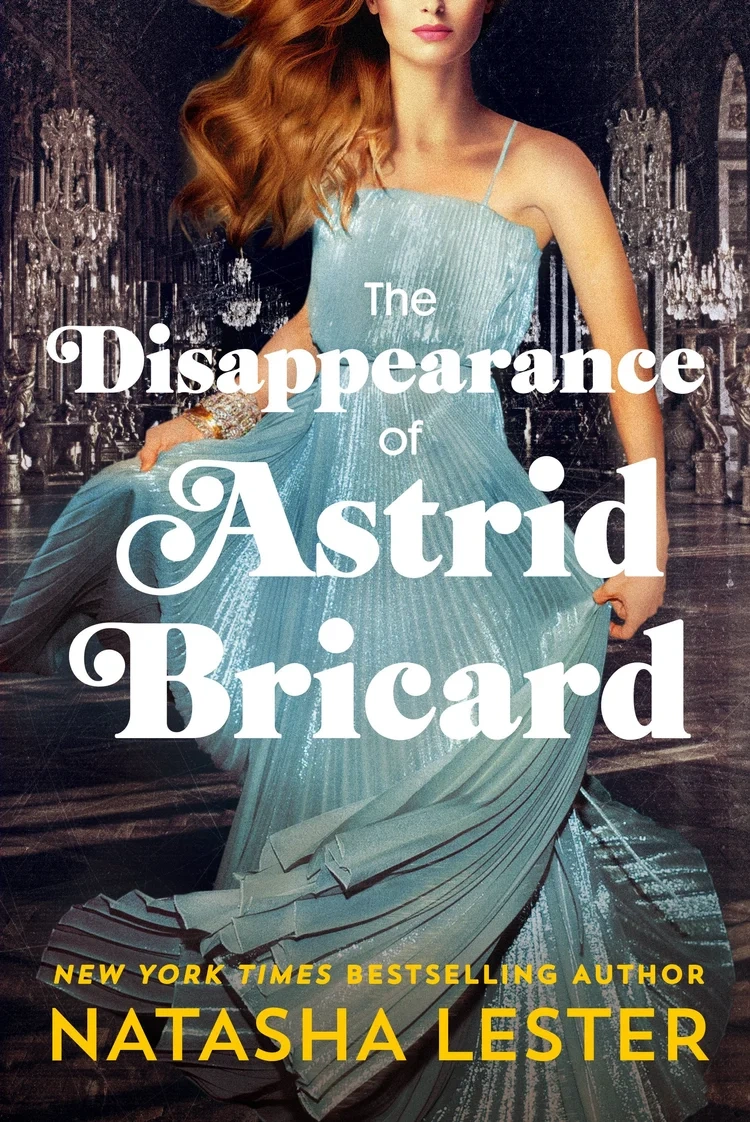
The disappearance of Astrid Bricard, by Natasha Lester
The Disappearance of Astrid Bricard combines fashion across eras and decades with three generations of women involved in the industry in different ways. But all have something in common — they are overlooked by history for their work but renowned for their shortcomings.
The novel is set in Paris in 1917 and during WWII, New York in 1970 and the French countryside in the present day. The story revolves around Astrid Bricard who disappears on the cusp of stardom at the Fashion Battle of Versailles in 1973.
The author, Natasha Lester, and through her characters, writes about the huge gender imbalance in the fashion industry. She writes about the way women working in creative industries alongside men are often cast into the role of muse rather than the designer they are, their stories rewritten, and their talents erased.
As much as the book evoked discussion about the above, it was generally thought that the story was a little ‘light on’ and the author could have better developed her characters. In particular we all would have liked to know more about Mizza. Mizza’s story is relatively sparse although but it fleshes out more as it gets into the war years. Some felt the author threw several Mizza chapters at random, disrupting the flow of the book. Others felt the book had a fairly even, engaging pace.
Anne drew our attention to the Author’ Note at the back of the hard copy of the book and suggested that it would be worthwhile to read this as it helps solidify the story and characters.
The character of Mizza did actually exist. Mizza was the first assistant designer to Christian Dior. So too did the Battle of Versailles Fashion Show in 1973.
Marjorie drew our attention to Robin Givhan’s book The Battle of Versailles:
The Night American Fashion Stumbled Into the Spotlight and Made History in which the story revolves around the 1973 fundraiser to restore the Palace of Versailles and how the US fashion PR woman dreamed up the idea the raise the profile of American fashion designers she represented and much more about the fashion industry.
The book did raise much discussion about the fashion industry, gender equality and fashions throughout our lifetime and evoked memories of when we were brazen enough to wear really short minis.
Mary W
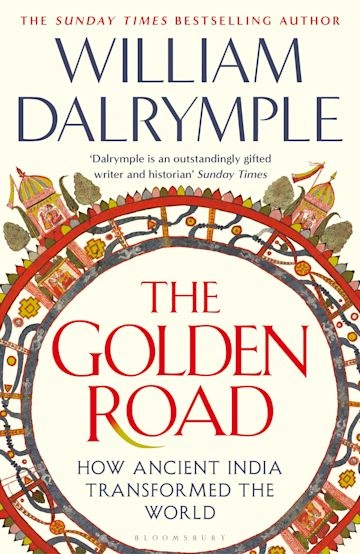
The Golden Road by William Dalrymple (first printed 2024)
Discussion Facilitator: Lucy
Group: Marjorie, SallyG, Barbara, Kathleen, Peta and Anne
Discussion:
The Golden Road explores how ancient India profoundly influenced the world over a millennium and a half. Dalrymple highlights India's historical position as a global exporter of civilization, demonstrating its impact on art, religion, technology, astronomy, music, dance, literature, mathematics, and mythology. The book traces what he calls the “Golden Road”—a cultural and intellectual exchange network stretching from the Red Sea to the Pacific. Notable examples include:
The largest Hindu temple in the world at Angkor Wat
Spread of Buddhism to China
Trade financing the Roman Empire
Development of the numeral system, including zero
Forget the Silk Road, argues William Dalrymple in his dazzling new book. What came first, many centuries before that, was India’s Golden Road, which stretched from the Roman empire in the west all the way to Korea and Japan in the far east. For more than a millennium, from about 250BC to AD1200, Indian goods, aesthetics and ideas dominated a vast “Indosphere”. Indian merchants, travelling huge distances on the monsoon winds, reaped vast profits from its matchless cloth, spices, oils, jewellery, ivory, hardwoods, glass and furniture.
The Golden Road deftly charts these economic developments. But Dalrymple’s larger theme is India’s intellectual hegemony. As he shows, during this era India was the great religious and philosophical superpower of Eurasia, with lasting effects into the present.
The book focuses first on the spread of Buddhism, which from a marginal Indian sect in due course became central to Chinese, Japanese and Korean culture, as well as flourishing elsewhere in the region. It then traces the extraordinary adoption of Hindu and Sanskrit culture by rulers across south-east Asia who were swayed by the prestige of these Indian modes of thought and life. The greatest Buddhist and Hindu temples ever constructed lie not in India itself, but, respectively, at Borobudur on Java, and at Angkor Wat in Cambodia, the largest religious structure ever erected anywhere in the world.
Finally, The Golden Road tells the gripping story of how fundamental astronomical and mathematical tools such as our modern number symbols, the decimal system, algebra, trigonometry and the algorithm were developed in India and spread across the world and, along with the Indian game of chess, eventually reached the backward cultures of Christian Europe.
In Particular the spread of Buddhism and Hinduism and the learning and establishment of early libraries, astronomy and mathematics studies by monks was crucial to foundations of our world were established in India. Libraries such as Yalanda were created and fostered immense development of knowledge.
Other themes were the Spread of religion, Maritime trade routes, Cultural exchange and influence, use of mines and jewels and other natural minerals from the earth and early medicine doctrines .
The Yalanda scholars included Aryabhata, who is believed to have envisioned the concept of zero, as well as working on the approximation for the long-form number Pi. Aryabhata is also believed to be the first of the Indian mathematician-astronomers who postulated the theory that the Earth moves round the Sun and is not flat, but instead is round and rotates on its own axis. He also may have discovered that the moon and planets shine due to reflected sunlight.
Varahamihira was an astronomer, astrologer, and mathematician, whose main work is a treatise on mathematical astronomy. Sushruta, a famed Indian physician of the Gupta period, wrote the Samhita, a Sanskrit text on all of the major concepts of ayurvedic medicine, with innovative chapters on surgery. Other scholars of the Golden Age helped create the first Indian numeral systems with a base of ten. The game of chess also likely originated during this period, where its early form, Chaturanga, contained game pieces for infantry, cavalry, elephants, and chariots, each of which would evolve into the modern pawn, knight, rook, and bishop, respectively.
The Indian scholar and Hindu philosopher Vatsyayana, authored the Kama Sutra, which became a standard work on human sexual behavior, while Vishnu Sharma was thought to be the author of the Panchatantra fables, one of the most widely-translated, non-religious books in history.
The cultural creativity of the Golden Age of India produced magnificent architecture, including palaces and temples, as well as sculptures and paintings of the highest quality.
The walls of Buddhist shrines and monasteries were decorated with colorful frescoes, a type of wall paintings. These showed scenes from the life of the Buddha, the ascetic and philosopher, who lived in the eastern part of the Indian subcontinent sometime between 4th and 6th centuries, on whose teachings the Buddhist religion is based. Many shrines were cut into cliffs, and although dark, they were also decorated with sculptures and paintings.
The Gupta Dynasty promoted Hinduism, but supported Buddhist and Jain cultures as well.
It is interesting to note how peacefully people from different religions lived in harmony.
Gupta Buddhist art influenced East and Southeast Asia as trade between regions increased. The Gupta Empire became an important cultural centre and influenced nearby kingdoms and regions in Burma, Sri Lanka, Thailand , Laos and Southeast Asia. Classical forms of Indian music and dance, created under the Guptas, are still practiced all over Asia today.
The Indian influence reached as far as Afghanistan China.
Further Resources:
(1) The Silk Roads(2) The New Silk Roads (3) The Earth Transformed: An Untold History by Peter Frankopan.
Empire World History– a podcast from The Empire Club by William Dalrymple and Anita Anand.
Midnight’s Children by Salman Rushdie
Hamnet by Maggie O’Farrell (printed 2020)
Discussion Facilitator: Anne
Group: SallyG, Jude, MaryT, Lucy, Kathleen, Barbara, Peta and Angela
Discussion:
This book is an historical fiction inspired by the tragic loss of Hamnet at the age of 11 years who died in Stratford Warwickshire in the summer of 1596, who is the son of William Shakespeare and his wife, Agnes. Not a lot is known concerning the cause of Hamnet’s death but the novel presumes that he died as a result of The Black Death.
We noted:
• we enjoyed this beautiful book and that the language was amazing with a great deal of research undertaken by the author;
it is a very descriptive book;
how Agnes’ special gifts affected her reputation in the town and her reconnection to her husband;
the description of how the plague reached Warwickshire was particularly clever;
the relationship of the plague and COVID both being viruses that mutate;
that The Black Death does not appear in any of Shakespeare’s plays;
the various approaches to family and to the death of fathers by William and his father, John;
Bartholomew’s magnificent role in support of Agnes as her brother;
Agnes’ strength in encouraging William to go to London to seek out his path in life;
it was interesting that William was never actually named in the book, i.e. only ever being referred to as “the husband” or “the father”;
how the different approaches of the mothers i.e. Agnes, Joan (her mother-in-law) and Joan (Agnes’ stepmother) responded to family and Hamnet’s death;
the final reconciliation between William and Agnes following the production of Hamlet in Lond was particularly profound and heartfelt as though a “veil was lifted”.
We agreed that this is a very worthwhile book.
Further Resources:
Land– a new book by Maggie O’Farrell
Cloud Atlas – by David Mitchell an acclaimed English author best known for his complex genre-blending post modern novels